
Tokenizing it All:From Agricultural Trading to Live Events
When most people hear "tokenized assets," they often imagine a skyscraper sliced into digital fractions or a speculative token backed by nothing more than a whitepaper. However, both assumptions are wrong and are holding investors back from one of the most accessible yield opportunities in digital finance today.
The deals on Metafyed's platform reveal just how wide the tokenized private credit opportunity really is. Let’s explore more exciting ideas together.
Unveiling the Differentiation Factor
RWA tokenization, done properly, is not about creating new financial instruments. The real value lies in digitizing the distribution of ones that already exist: secured private credit deals with collateral, covenants, and cash flows already in place. What changes is who can access them and how quickly capital can move.
The range of underlying assets that qualify is far broader than most investors realize. For example, deals currently active on Metafyed's platform make this concrete: an AI-enhanced agricultural trading company in Southeast Asia, and the Westlife World Tour in Malaysia. They have almost nothing in common on the surface, except that both fit the same rigorous credit framework, and both would have been invisible to most investors without tokenization.
The asset class that ate Wall Street's lunch is now open to everyone — if you know where to look. Something quietly remarkable has happened in the private credit market over the past three years. Across seven periods of rising rates since 2008, returns in direct lending have averaged around 11.5%, according to Morgan Stanley research, comfortably outpacing high-yield bonds, leveraged loans, and most of what sits in a standard retail portfolio. As of early 2025, private credit was yielding over 10%, with a 226-basis-point yield premium over B-rated loans — nearly double its average premium since 2021!
The returns might not be a huge secret, but the access is. Private credit has always been the domain of institutions, family offices, and sovereign wealth funds. Getting into a deal meant knowing the right GP, clearing a $5 million minimum, and waiting years for a redemption window. The asset class outperformed for decades, partly because so few people could participate in it.
Tokenization is changing that structure as tokenized private credit has surged to roughly $17 billion on-chain as of September 2025, making it the largest non-stablecoin RWA segment — and it is growing not because of speculation, but since the underlying yield is real and the distribution problem is finally being solved.
What the Filter Actually Looks Like
Before examining the deals, checking the framework matters. Not every asset qualifies for tokenization, and the criteria are often tight by design.
Metafyed operates exclusively in the secured private credit layer of the capital stack — above senior bank debt, and below sponsor equity. Every deal must have verifiable collateral and identifiable cash flows confirmed through third-party auditing. Moreover, each deal sits in a ring-fenced legal vehicle with documented security covenants and a waterfall. Tokens record investor claims on that vehicle on-chain, while the cash flows and collateral stay in traditional legal structures.
The question every asset has to answer is the same one a credit desk at a major institution would ask: does this make sense as a secured loan? If yes, tokenization is purely a distribution mechanism. If no, the blockchain can’t fix it.
Deal One: AI-enhanced agricultural trading
Asset class: Project finance · Horizon: 35 days · Target return: 22% ARR
Agricultural commodity trading is one of the oldest forms of short-duration credit in existence. How does it work? A company buys a commodity — grain, palm oil, rice — at one price, moves it through a supply chain, and sells it at a margin. The financing gap between purchase and sale, when backed by the physical commodity and a profitable operating track record, is textbook private credit.
This particular company is profitable and operationally established, not seeking tokenized capital because it can’t access banks. The thing is, the short-cycle nature of commodity trade fits poorly with traditional loan facilities, which are structured for longer durations and slower drawdowns. Tokenized credit gives the company a faster, more flexible capital source. Investors get exposure to a deal type that mezzanine and direct lending structures have historically returned between 9% and 11.4% annualized — except here the duration is measured in weeks, not years.
What makes the asset tokenizable comes down to three things. First, physical commodities provide collateral with a live market price — independently verifiable at any point in the deal. Second, the cash flow cycle is short and self-liquidating: 1 to 3 months, tied to a real trading cycle rather than a forecast. Third, the AI layer is not a technology bet, but an operational tool that optimizes trade timing and supports margin consistency, which in turn supports credit quality. Investors are not backing an algorithm. They are backing a profitable trading business that uses better tools than its competitors.
For context: private credit yields in Q1 2026 remain in the high single digits on an unlevered basis for senior-secured risk, even after three Fed rate cuts in 2025! A 15–18% ARR on a sub-quarter structure — fully secured, third-party audited — sits at the premium end of what the market offers at any duration.
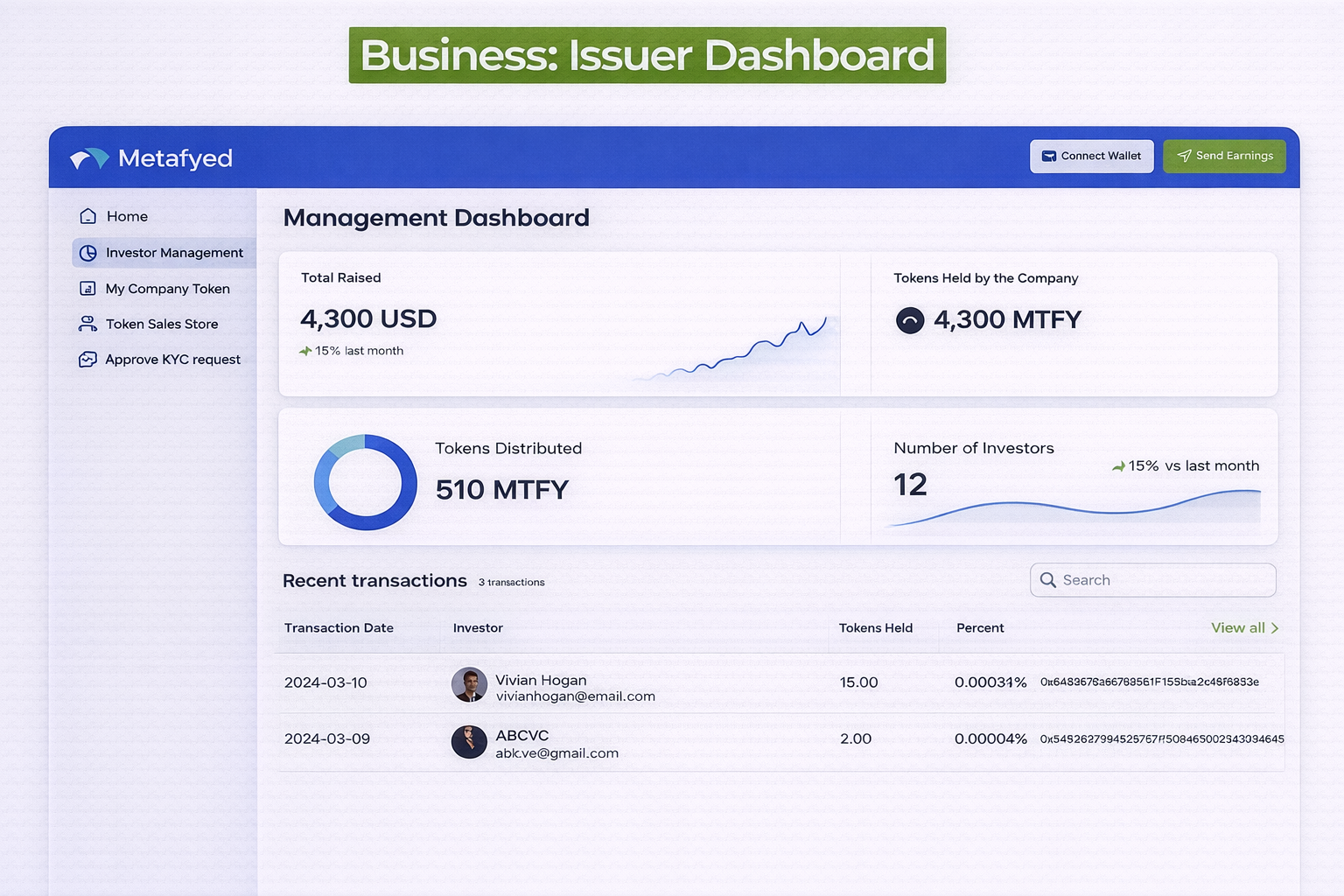
Private credit investing simplified
The Pattern Recognition
The last years of the crypto industry have been marked by severe turbulence, but the total tokenized RWA market jumped from $15.2 billion in December 2024 to over $30 billion by May 2026 — an over 100% year-on-year climb. And that growth was not coming from speculative categories. Private credit and US Treasuries continue to dominate the RWA market structure, reflecting institutional appetite for yield-bearing assets with enhanced distribution and operational efficiency.
The reason is straightforward: tokenization does not add risk to a private credit deal, but it adds reach. The underlying structure — secured collateral, ring-fenced vehicle, defined waterfall, regulated trustee, is the same structure that institutional credit desks have used for decades. What changes is that a KYC-compliant investor on a licensed exchange in Kuala Lumpur, Hong Kong, or Vancouver can now access the same deal that previously required a phone call to the right fund manager.
Different deals make the same underlying point. The universe of tokenizable private credit is not limited to real estate, but by the quality of the underlying credit structure. Anywhere there is a short-duration financing need, a verifiable asset, and a predictable cash flow cycle, the architecture is replicable: trade finance, infrastructure project bridging, event financing, revenue-backed SME lending. Each has existed in institutional private credit for decades; however, what has changed is who gets to participate.
The size of private credit at the start of 2025 was $3 trillion, compared to about $2 trillion in 2020, and it is estimated to grow to approximately $5 trillion by 2029. The on-chain slice of that, today, is a rounding error.
The deals that will close that gap are not going to be landmark real estate projects or sovereign bond tokenizations. There’s a huge opportunity in agricultural trading cycles, concert tours, trade receivables, and infrastructure bridges — mundane credit structures that happen to be good businesses, financed by investors who previously never knew they existed.
And Metafyed provides a safe and accessible gateway to these opportunities. Learn more at:
Visit our website I Follow us on X I Join the Telegram Community
This article is intended for general informational purposes and should not be construed as financial, investment, or legal advice.